Crosby Garrett Village - Coast to Coast
More Articles in the Orton to Kirkby Stephen subsection
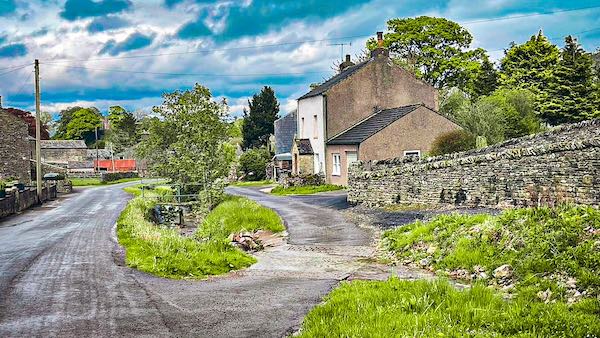
Crosby Garrett and Crosby Garrett Beck
Crosby Garrett Village - Coast to Coast
Crosby Garrett is a small Cumbrian hamlet at the north-east foot of Crosby Garrett Fell, separated from the fell itself by the former Smardale railway. It lies approximately 3 miles west of Kirkby Stephen, 1 mile north of Smardale Hall and the Smardale Gill National Nature Reserve, and around 2 miles west of Waitby Greenriggs Nature Reserve. Home to a population of about 200, Crosby Garrett provides an attractive base for exploring this section of the Coast to Coast route, as well as the extensive limestone pavements of Little Asby Scar and Great Asby Scar.
Crosby Garrett Pinfold
At the foot of Crosby Garrett Fell, this old stone pinfold survives beside the former Smardale railway as a small reminder of a once-familiar part of village life. Straying sheep and cattle were gathered within its walls until their owners reclaimed them, usually after paying a fine. Today its rough limestone enclosure sits quietly in the grass, linking the modern village with generations of farming on the surrounding fells.
Crosby Garrett Beck
Crosby Garrett Beck slips quietly through the heart of the village, sometimes open to the sky and elsewhere disappearing beneath the road and buildings. Small bridges cross its partly culverted course, linking cottages and farms on either side. Flowing down from Crosby Garrett Fell, the beck brings the surrounding uplands into the village itself, its water and stone adding movement and sound to the otherwise peaceful lanes.
Old Rectory Barn Crosby Garrett
Opposite St Andrew’s Church, the Old Rectory Barn brings a sterner character to the quiet village street. Its thick stone walls and robust construction give it an almost fortified appearance, although it was built for agricultural use. The barn stands within an area associated with Roman settlement, adding another layer to a place where the village’s farming past and much older occupation lie remarkably close together.
Crosby Garrett Helmet
Few discoveries have given this quiet Cumbrian village such an extraordinary link with the Roman world. Found near Crosby Garrett in 2010, the elaborate cavalry helmet had lain buried for centuries before being recovered in 67 fragments. Dating from the 2nd or 3rd century AD, its haunting face mask and richly decorated headpiece were painstakingly reconstructed, transforming scattered pieces of corroded metal into one of Britain’s most remarkable Roman finds.
🏺 Insight – Archaeology
A Helmet Made for Spectacle
Despite its martial appearance, the Crosby Garrett Helmet was not intended for battle. Its thin metal and elaborate face mask identify it as a cavalry sports helmet, probably worn during the hippika gymnasia — spectacular displays in which Roman cavalrymen demonstrated horsemanship, weapons skills and manoeuvres before an audience. With its youthful silvered face, golden-brass coloured cap and griffin crest catching the sunlight, the helmet would have transformed its rider into an almost theatrical figure of Roman power and mythology.
How such a magnificent object came to rest near Crosby Garrett remains a mystery. The visor was found face down and evidence suggests that the helmet itself had been deliberately folded before burial. It lay well away from a known Roman garrison, although Roman military sites surrounded the wider region. Archaeologists have suggested several possibilities: it may have been hidden for safekeeping, deposited as a ritual offering, or even buried as captured loot. Without a controlled excavation of the original findspot, the answer may never be known.
Well Kept Gardens
Crosby Garrett’s quiet lanes are softened by gardens enclosed within traditional stone walls, where clipped shrubs, mature trees and colourful planting sit naturally among the old village buildings. The effect is intimate after the openness of the surrounding fells. Birdsong carries between the gardens and across the beck, giving this small corner of the village a gentler character — a brief, cared-for interlude in the wider limestone landscape.
Viaduct and Steam Train
From the slopes of Crosby Garrett Fell, the viaduct stands boldly across the valley, its stone arches carrying the Settle–Carlisle line above the fields below. When a steam locomotive crosses, the scene suddenly comes alive — smoke and steam billowing above the arches and the sound of the engine carrying across the open fell. For a few moments, this quiet Cumbrian landscape seems to return to the great age of steam.
Ford on Scandal Beck
Beyond the village, Tarn Lane drops towards Smardale and meets Scandal Beck at this broad stone-pitched ford. Water spreads across the old lane before continuing towards the River Eden, while the surrounding banks draw the route into a quieter, more secluded landscape. For the walker, the crossing feels like a natural threshold — leaving the intimacy of Crosby Garrett behind and heading back towards the open fells and the wild limestone country of Smardale.
Take the Coast to Coast Guide With You
Available on Apple Books — £12.99
Hiking the Coast to Coast combines step-by-step route directions, interactive mapping, hundreds of original photographs and information about the landscapes, history and places encountered along the route.
© 2026 Roy McKee · Coast to Coast
Contact - Privacy. - Terms


